The Complete History of Arsenal Football Club
Some football clubs measure success in trophies. Others measure it in generations of supporters, unforgettable moments and an identity that survives every triumph and every setback. Arsenal belongs firmly in the second category. Few clubs in world football have managed to reinvent themselves so many times while remaining unmistakably Arsenal.
The History of Arsenal Football Club is far more than a timeline of league titles and famous goals. It is a story of ambition, innovation and resilience that stretches from the industrial streets of south-east London to packed stadiums across every continent.
From a group of factory workers kicking a football after long shifts at the Royal Arsenal to one of the biggest sporting institutions on the planet, Arsenal’s journey reflects more than 140 years of English football itself.
Along the way, the club has produced legendary captains, visionary managers, revolutionary ideas and unforgettable teams. Herbert Chapman transformed the tactical landscape of football. Arsène Wenger changed how English clubs thought about nutrition, sports science and recruitment. Mikel Arteta has restored belief that Arsenal can once again compete with Europe’s elite.
Between them came countless players whose names remain woven into the club’s identity, from Cliff Bastin and Ted Drake to Tony Adams, Thierry Henry and Bukayo Saka.
Supporters often say Arsenal is “more than a football club.” It may sound like a cliché until you understand the history behind those words. Every era has added another chapter to a story built on courage, elegance, ambition and an unwavering belief that football can be played beautifully without sacrificing success.
This is the complete history of Arsenal football club, from Woolwich to the world stage.
The Founding Years: Woolwich Arsenal (1886–1913)
Long before floodlit Premier League nights and European adventures, Arsenal began life in a very different setting.
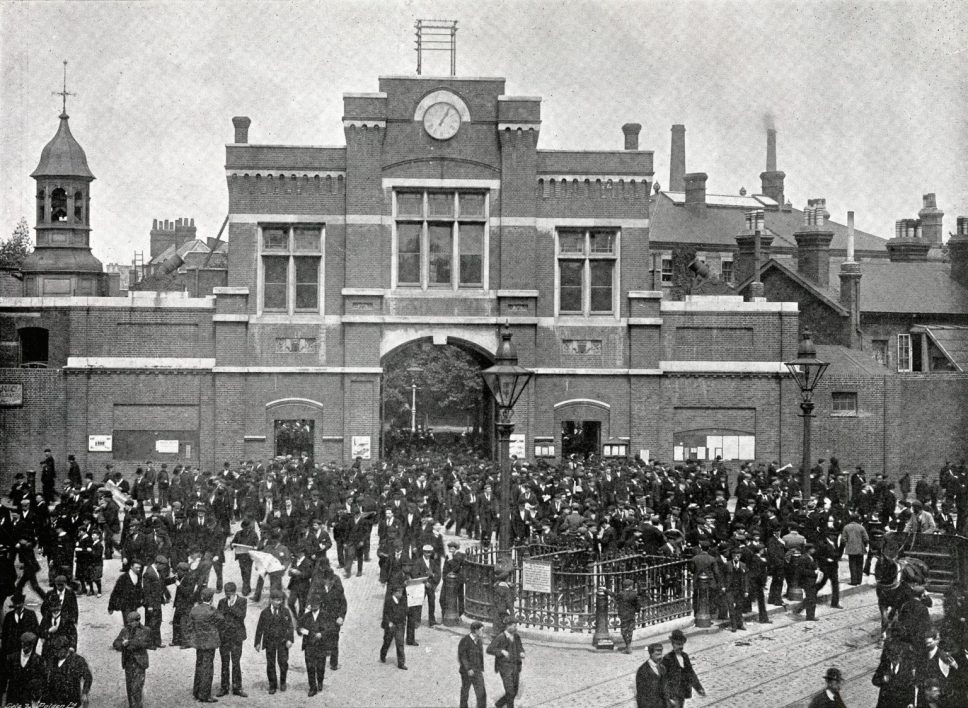
On 1 December 1886, a group of workers employed at the Royal Arsenal armaments factory in Woolwich gathered with a simple idea: to form a football club that would represent their community.
The factory manufactured weapons for the British Army, and many of its employees were skilled craftsmen from across Britain who had brought with them a love of the rapidly growing game.
The club’s first name was Dial Square, taken from one of the workshops inside the factory complex.
The driving force behind its formation included Scotsman David Danskin, together with fellow workers Jack Humble, Fred Beardsley, Morris Bates and Bill Parr. Beardsley and Bates had previously played for Nottingham Forest and even helped secure the club’s first football by returning to their former club for assistance.
Dial Square played their first recorded match on 11 December 1886 against Eastern Wanderers, winning 6–0. It was a modest beginning, but few could have imagined the institution that would eventually grow from it.
Within weeks, the club adopted a new name: Royal Arsenal.
The change better reflected both its workforce and its location. It also gave the club a stronger identity at a time when football clubs often represented factories, churches or local communities.
Becoming Woolwich Arsenal
Football was changing rapidly during the late nineteenth century.
Professionalism became legal in England in 1885, and ambitious clubs sought to establish themselves in organised competition rather than local friendlies.
Royal Arsenal quickly became one of the strongest amateur sides in London before embracing professionalism in 1891. That decision proved controversial. Many southern clubs still preferred amateur football and objected to professional teams competing alongside them.
Unable to find suitable opposition locally, Arsenal took an ambitious step.
In 1893, the club joined the Football League Second Division, becoming the first club from southern England to enter the Football League. To mark the occasion, the club adopted another new identity: Woolwich Arsenal.
The move changed English football forever.
Until then, league football had been dominated by clubs from the Midlands and the North. Woolwich Arsenal opened the door for southern clubs to compete on equal terms, helping reshape the geographical balance of the professional game.
Promotion to the First Division followed in 1904 after years of steady progress under manager Harry Bradshaw.
For supporters in Woolwich, it felt as though the future had finally arrived.
Unfortunately, success on the pitch could not solve deeper financial problems.
Financial Struggles
Despite playing top-flight football, Woolwich Arsenal struggled to attract crowds comparable to clubs in more densely populated parts of London.
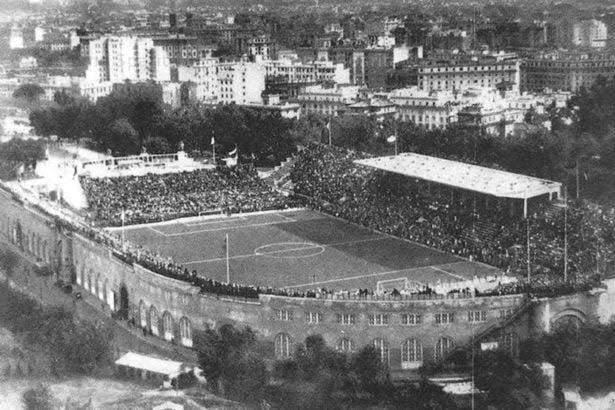
The Manor Ground in Plumstead was difficult for many supporters to reach. Transport links were poor, while clubs in central and west London enjoyed far larger catchment areas.
Financial pressures mounted.
Relegation from the First Division in 1913 only worsened matters. Attendances declined further, debts increased, and the club’s long-term future appeared uncertain.
It was at this critical moment that businessman Sir Henry Norris recognised an opportunity.
Having become involved with the club several years earlier, Norris believed Arsenal needed a fresh start away from Woolwich if it was to survive.
The Move to Highbury
In the summer of 1913, Arsenal made what remains one of the most important decisions in the club’s history.
The club relocated around 10 miles north to Highbury, leasing land owned by St John’s College of Divinity.
The new stadium stood close to Highbury & Islington, offering dramatically better transport connections and access to a much larger population.
The move was bold.
Many supporters in Woolwich felt abandoned. Others questioned whether supporters in north London would embrace a club with such strong south London roots.
History answered those questions emphatically.
The first match at Highbury took place on 6 September 1913 against Leicester Fosse. Although Arsenal lost 2–1, attendance figures immediately suggested the relocation had transformed the club’s prospects.
At the same time, the club quietly dropped “Woolwich” from its name.
From then on, it was simply Arsenal.
The identity recognised around the world today had finally been born.
Arsenal’s Controversial Return to the First Division
The First World War halted league football in 1915.
When competitive football resumed in 1919, the Football League expanded the First Division from 20 to 22 clubs.
Although Arsenal had finished only fifth in the Second Division before the war, chairman Sir Henry Norris successfully argued that the club deserved election to the top flight because of its long service to the Football League and previous commitment to professionalism.
The decision proved controversial.
Tottenham Hotspur, who had finished bottom of the First Division before football was suspended, expected to retain their place.
Instead, Arsenal received enough votes from league clubs to be promoted to the First Division, while Tottenham were relegated.
The controversy sparked a rivalry that still burns more than a century later.
Arsenal have never been relegated from England’s top division since that promotion in 1919, a record that underlines the remarkable consistency the club would later achieve.
The foundations had been laid.
What Arsenal still lacked was a visionary capable of turning a respectable football club into a dominant force.
That man arrived in the autumn of 1925.
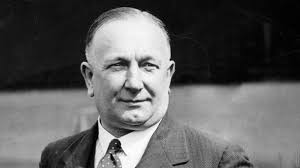
Herbert Chapman and the First Golden Era (1919–1939)
By the middle of the 1920s, Arsenal had established itself in the First Division but rarely threatened to win the biggest honours. The club possessed ambition, a growing fanbase and an impressive new home at Highbury, yet something was missing. Arsenal needed a leader who could see football differently from everyone else.
They found him in Herbert Chapman.
When Chapman arrived from Huddersfield Town in the summer of 1925, he was already regarded as one of the finest managers in England. He had guided Huddersfield to back-to-back league championships and brought with him ideas that were years ahead of his contemporaries. Arsenal were not simply appointing a manager—they were hiring a visionary.
Chapman’s influence reached every corner of the club.
He embraced scientific preparation at a time when football relied heavily on instinct and tradition. Players received better coaching, improved fitness programmes and greater tactical instruction. Chapman even believed the club’s image mattered.
Under his guidance, Highbury evolved into one of the country’s finest stadiums, complete with impressive Art Deco stands that became symbols of Arsenal’s growing stature.
One of his most famous innovations followed a change to the offside law in 1925. Rather than persisting with outdated formations, Chapman devised the WM system, a tactical shape that strengthened the defence while creating space for attacking players.
The formation spread rapidly across England and beyond, influencing football for decades.
Chapman also pushed for numbered shirts, floodlighting experiments and better travel arrangements for players. Modern football management owes more to him than many supporters realise.
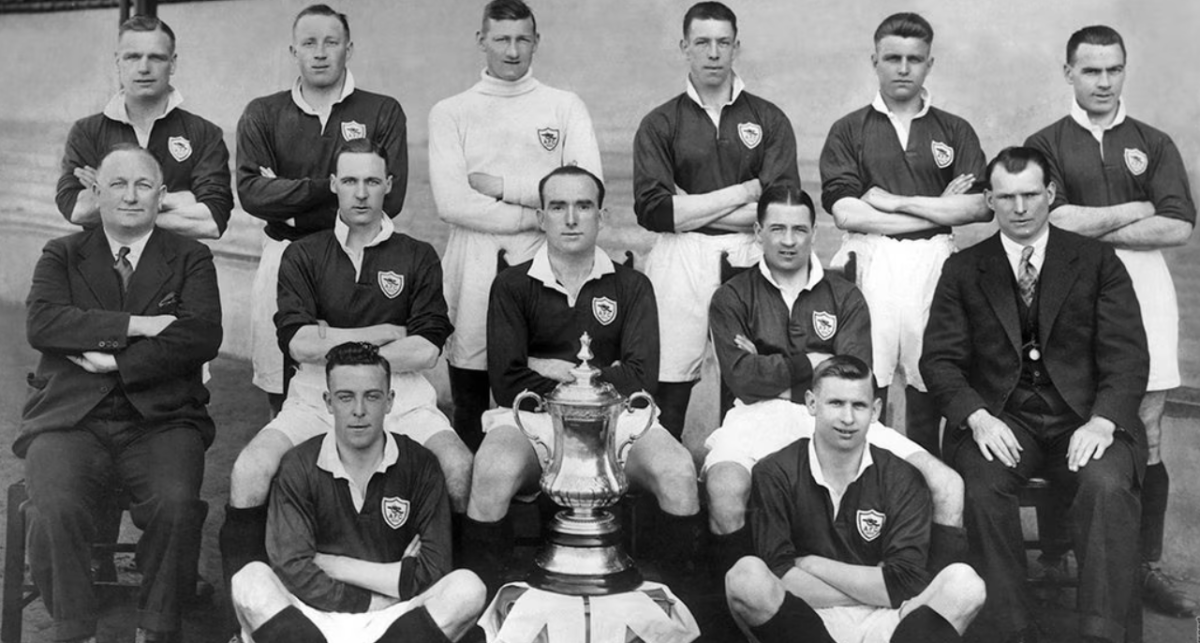
Arsenal Become Champions
Success did not arrive overnight.
Arsenal first reached the FA Cup Final in 1927 but lost narrowly to Cardiff City after a goalkeeping error. Rather than signalling failure, the defeat strengthened the team’s resolve.
Three years later, Arsenal returned to Wembley and defeated Huddersfield Town 2–0 to win the 1930 FA Cup—Arsenal’s first major trophy. Ironically, Chapman had left Huddersfield to join Arsenal just five years earlier.
That victory opened the floodgates.
Arsenal claimed their first league championship in 1930–31, finishing seven points clear at the top of the First Division. They defended their reputation with another title in 1932–33 and looked set to dominate English football for years to come.
Highbury had become the place every club feared visiting.
The Stars of the Chapman Era
Great managers require great players, and Chapman assembled one of the strongest squads English football had seen.
Alex James, signed from Preston North End, became the creative heartbeat of the side. Small in stature but immense in vision, the Scottish inside-forward dictated matches with elegant passing and remarkable intelligence.
On the wing, Cliff Bastin terrorised defenders with pace and finishing. He would eventually become Arsenal’s all-time leading goalscorer before Thierry Henry surpassed his record more than 60 years later.
David Jack, the first £10,000 footballer, added composure and goals from midfield, while Ted Drake developed into one of England’s most feared centre-forwards. Drake famously scored seven goals in an 8–1 victory over Aston Villa in December 1935—a First Division record that still stands.
Together, they transformed Arsenal from hopeful challengers into the country’s dominant force.
A Tragic Loss
On 6 January 1934, English football received devastating news.
Herbert Chapman died suddenly from pneumonia at the age of just 55.
His death shocked the football world. Arsenal had lost the architect of their success in the middle of another title challenge.
Many clubs might have collapsed.
Arsenal did the opposite.
Under Joe Shaw as caretaker before George Allison assumed full control, the club continued to build on Chapman’s foundations. The standards he established remained deeply embedded within Highbury.
During the remainder of the decade, Arsenal added league titles in 1933–34, 1934–35 and 1937–38, while also lifting another FA Cup in 1935–36.
By the outbreak of the Second World War in 1939, Arsenal had won five league championships and two FA Cups during one of the most remarkable periods of sustained excellence English football had ever witnessed.
The transformation was extraordinary.
When Chapman arrived, Arsenal were an ambitious London club with potential.
By the time the 1930s ended, they had become one of the giants of English football.
Post-War Arsenal and the 1950s–1960s
When peace returned to Britain after the Second World War, football resumed in a country that had changed beyond recognition. Stadiums had suffered bomb damage, communities were rebuilding their lives, and many players had spent years serving in the armed forces. Arsenal were no exception.
Yet the club emerged from the war determined to reclaim its place at the summit of English football.
The post-war years also marked the end of an era. The great team that Herbert Chapman had built had gradually broken up, but the winning mentality he instilled still echoed through Highbury. Arsenal’s challenge was to honour that legacy while creating a new one.
Champions Again in 1947–48
Under manager Tom Whittaker, Arsenal quickly re-established itself as one of the country’s strongest sides.
Whittaker knew the club inside out. Before becoming manager, he had served as a trainer under Herbert Chapman and later George Allison. Few people understood Arsenal’s culture better.
His first great achievement came in the 1947–48 First Division season, when Arsenal claimed the league title with a stylish, attacking side that scored 84 league goals.
Leading the way was prolific striker Reg Lewis, while players such as Joe Mercer, Alex Forbes, Les Compton and goalkeeper George Swindin gave the team quality throughout the pitch.
Highbury was once again celebrating championship football.
FA Cup Glory in 1950
Arsenal reached another milestone two years later.
On 29 April 1950, they defeated Liverpool 2–0 at Wembley to lift the FA Cup for the third time in the club’s history. Reg Lewis scored both goals, producing one of the finest performances of his career.
The victory completed another successful chapter for Tom Whittaker and confirmed Arsenal’s return among England’s elite after the disruption of the war.
Another League Championship
Success continued.
In 1952–53, Arsenal edged Preston North End to win the First Division title on goal average—the system used before goal difference was introduced.
It remains one of the closest title races in English football history.
The championship would also prove to be Arsenal’s last league triumph for almost two decades.
The Beginning of a Long Decline
Football evolves quickly.
By the mid-1950s, Arsenal’s rivals had modernised while the club struggled to refresh an ageing squad. Financial caution limited major investment, and Highbury gradually lost the aura it had enjoyed during the Chapman years.
Tom Whittaker’s sudden death in 1956 dealt another heavy blow.
Several managers attempted to reverse Arsenal’s fortunes, including Jack Crayston, George Swindin and Billy Wright, but none succeeded in restoring consistent success.
League positions drifted into mid-table.
Cup runs ended in disappointment.
Supporters who had grown accustomed to challenging for honours found themselves watching rivals collect trophies instead.
The Quiet Years
The late 1950s and much of the 1960s have often been described as Arsenal’s forgotten era.
That description feels harsh, but it reflects the reality.
The club remained respected and continued to attract loyal crowds at Highbury, yet silverware became increasingly elusive. Between 1953 and 1970, Arsenal failed to win a single major trophy.
There were flashes of promise.
Young talents emerged through the ranks, while Highbury retained its reputation as one of England’s great football grounds. The club also reached the League Cup Final in both 1968 and 1969 but lost to Leeds United and Swindon Town respectively.
Those defeats hurt.
The loss to Third Division Swindon Town at Wembley in particular became one of the darkest afternoons in Arsenal’s modern history. Supporters wondered whether the club would ever return to its former greatness.
Fortunately, change had already begun behind the scenes.
It arrived in the unlikely shape of a former physiotherapist.
Bertie Mee and the Double (1966–1976)
When Bertie Mee became Arsenal manager in June 1966, few expected him to oversee one of the greatest periods in the club’s history.
Mee had never planned to become a football manager.
Having served as the club’s physiotherapist, he accepted the role only after Arsenal struggled to appoint a more experienced candidate. He famously joked that the club should keep looking because they might find someone better.
They never needed to.
Building a New Arsenal
Mee inherited a squad that lacked confidence but contained genuine potential.
Rather than chasing expensive signings, he placed his faith in youth and strong leadership.
Players such as Bob Wilson, Pat Rice, Frank McLintock, Peter Storey, Charlie George, Ray Kennedy, George Armstrong and John Radford gradually developed into a cohesive, disciplined unit.
Assistant manager Don Howe also played a crucial role, bringing tactical organisation and excellent coaching methods that perfectly complemented Mee’s calm leadership.
The results improved steadily.
Supporters sensed something special was growing.
Arsenal’s First European Trophy
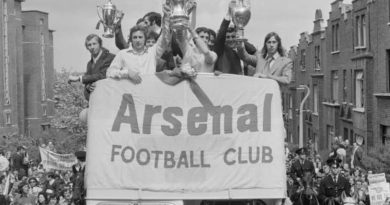
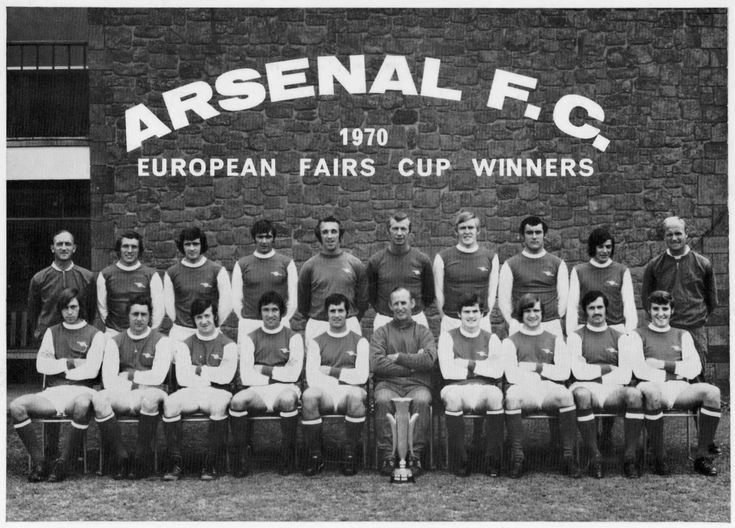
The breakthrough arrived during the 1969–70 Inter-Cities Fairs Cup.
Arsenal reached the final against the Belgian side Anderlecht.
After losing the first leg 3–1 in Brussels, the task looked almost impossible. Few teams recovered from such deficits in European finals.
Highbury had other ideas.
Roared on by a packed crowd, Arsenal produced one of the greatest comebacks in club history, winning the second leg 3–0 through goals from John Radford, Eddie Kelly and Jon Sammels.
The 4–3 aggregate victory secured Arsenal’s first-ever European trophy.
For a club that had spent almost two decades waiting for silverware, it felt like the beginning of something much bigger.
It was.
The Historic Double of 1970–71
Only one English club had previously won the league title and the FA Cup in the same season.
Arsenal were about to become the second.
The league campaign reached its dramatic climax on 3 May 1971.
Arsenal travelled to the home of their fiercest rivals, Tottenham Hotspur, needing victory to secure the First Division championship.
There could hardly have been a more fitting stage.
White Hart Lane was packed.
The tension was unbearable.
For 87 minutes, neither side found the breakthrough.
Then came the moment every Arsenal supporter knows by heart.
Midfielder Ray Kennedy rose above the Tottenham defence to head George Armstrong’s cross beyond goalkeeper Pat Jennings.
Arsenal won 1–0.
The league title belonged to the Gunners.
Winning a championship is memorable.
Winning it at your greatest rival’s stadium turns it into folklore.
Wembley Glory
Five days later, Arsenal travelled to Wembley for the FA Cup Final against Liverpool.
Extra time was required after Steve Heighway gave Liverpool the lead.
Then Arsenal responded.
First, Eddie Kelly equalised.
Soon afterwards came one of the most iconic moments in the club’s history.
Charlie George struck a fierce left-footed volley beyond Ray Clemence to make it 2–1.
As the ball hit the net, George collapsed onto the Wembley turf with his arms spread wide in celebration.
The image became immortal.
More than half a century later, it still appears in books, documentaries and murals celebrating Arsenal’s history.
The Double had been achieved.
For many supporters who lived through it, no Arsenal team has ever matched the romance of 1971.
Holding Their Place Among England’s Elite
The years that followed brought mixed fortunes.
Arsenal reached the FA Cup Final again in 1972 but lost 1–0 to Leeds United.
Another final appearance came in 1978, ending in defeat to Ipswich Town.
Although the club remained competitive, maintaining the extraordinary standards of the Double-winning side proved difficult.
Several key players grew older, while others moved on.
By the mid-1970s, another rebuilding job had begun.
The Wilderness Years and George Graham’s Arrival (1976–1986)
Football has a habit of moving in cycles.
The team that conquered England in 1971 gradually faded, and Arsenal entered another period of inconsistency.
There were exciting players and memorable afternoons, but sustained success proved frustratingly elusive.
Supporters waited patiently for another side capable of challenging Liverpool, Nottingham Forest and Everton, who dominated English football during much of the late 1970s and early 1980s.
Still, one unforgettable day reminded everyone that Arsenal remained capable of producing pure drama.
The Five Minute Final
The 1979 FA Cup Final remains one of Wembley Stadium’s greatest spectacles.
Arsenal faced Manchester United in a match that appeared comfortably won.
Goals from Brian Talbot and Frank Stapleton had given the Gunners a deserved 2–0 lead entering the closing minutes.
Then football turned completely upside down.
United scored twice within three minutes through Gordon McQueen and Sammy McIlroy.
From certain victory, Arsenal suddenly stared at extra time.
Highbury hearts sank.
Yet almost immediately after the restart, Liam Brady surged forward before releasing Graham Rix down the left.
Rix crossed first time.
Alan Sunderland arrived at the far post to score the winner.
Three goals had been scored in barely five minutes.
The final whistle followed moments later.
The match entered football folklore as “The Five Minute Final.”
For Arsenal supporters, it remains one of the most exhilarating endings ever witnessed.
Decline Through the Early 1980s
Unfortunately, the 1979 triumph proved another false dawn.
The club reached the finals of both the 1980 FA Cup and the 1980 European Cup Winners’ Cup, losing to West Ham United and Valencia respectively.
Those defeats were painful.
The European final was particularly cruel, with Arsenal losing on penalties after a goalless draw.
As the decade progressed, league performances declined once again.
Managers Terry Neill and later Don Howe struggled to build a team capable of challenging Liverpool’s dominance.
Attendances dipped.
Patience wore thin.
Arsenal needed fresh ideas.
George Graham Comes Home
In May 1986, Arsenal turned to one of their own.
George Graham, a member of the Double-winning side in 1971, returned as manager after impressive work with Millwall.
His personality contrasted sharply with some of his predecessors.
Graham demanded discipline.
Every player understood their responsibilities.
Standards rose immediately.
He also possessed a superb eye for talent.
Within a few seasons, Arsenal had assembled one of the finest defences English football has ever seen.
It became known simply as The Famous Back Four.
Alongside them stood a young captain whose name would become synonymous with Arsenal itself.
Tony Adams.
The club was ready for another golden chapter.
George Graham’s Arsenal: Grit, Glory and Controversy (1986–1995)
When George Graham walked back through the doors of Highbury in the summer of 1986, Arsenal were a sleeping giant.
The club still possessed one of English football’s proudest histories, but history alone wins nothing. Liverpool dominated the domestic game. Everton was a formidable force. Manchester United were beginning to gather momentum under Alex Ferguson. Arsenal needed more than nostalgia—they needed standards.
Graham brought them immediately.
Training became harder. Discipline became non-negotiable. Every player knew exactly what was expected. If they failed to meet those expectations, they quickly found themselves out of the team.
It wasn’t glamorous.
It worked.
More importantly, it restored Arsenal’s identity.
Building “The Famous Back Four”
Every great Arsenal side has had a defining characteristic.
Chapman’s team had tactical innovation.
Wenger’s teams had technical brilliance.
George Graham’s Arsenal had a defence that bordered on perfection.
The quartet of Lee Dixon, Tony Adams, Steve Bould, and Nigel Winterburn developed into arguably the finest defensive unit English football had seen.
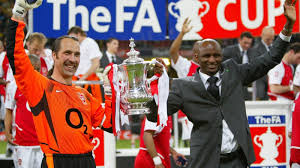
Behind them stood the calm and commanding David Seaman, whose arrival in 1990 completed the picture.
The offside trap became an art form.
Communication was constant.
Opponents rarely enjoyed a comfortable afternoon against Arsenal.
Captain Tony Adams embodied everything Graham demanded—leadership, courage, commitment and absolute professionalism on the pitch.
The nickname “1–0 to the Arsenal” emerged during this period.
Opposition supporters intended it as a joke.
Arsenal supporters wore it as a badge of honour.
Winning beautifully was nice.
Winning consistently mattered more.
Anfield, 26 May 1989: Ninety Minutes That Changed Everything
Some matches transcend football.
This was one of them.
Arsenal travelled to Anfield for the final match of the 1988–89 First Division season, needing to beat Liverpool by two clear goals to win the league.
Anything less handed the title to Liverpool.
The challenge appeared almost impossible.
Liverpool had dominated English football throughout the decade and Anfield remained one of the hardest places in Europe to win.
George Graham believed anyway.
After a tense first half, Alan Smith headed Arsenal into a 1–0 lead shortly after the interval.
Still not enough.
The clock ticked into stoppage time.
Arsenal needed one more goal.
Liverpool believed they had survived.
Then came footballing immortality.
Michael Thomas burst through midfield, collected Richard Rocastle’s pass and calmly lifted the ball beyond Bruce Grobbelaar.
2–0.
League champions.
Commentator Brian Moore’s famous words captured the moment forever:
“It’s up for grabs now…”
Thomas had written himself into Arsenal folklore.
The final whistle followed seconds later.
Players collapsed to the turf.
Supporters celebrated one of the greatest title wins English football has ever witnessed.
For many Gunners, no single league victory has ever carried greater drama.
Champions Again
Winning the league once could be dismissed as fortunate.
Winning it again removed all doubt.
Arsenal stormed to the 1990–91 First Division title, losing only one league match all season despite beginning with a two-point deduction following the infamous brawl against Manchester United at Old Trafford.
The side combined defensive organisation with growing attacking quality.
Paul Merson flourished.
Alan Smith remained reliable in front of goal.
David Seaman quickly established himself as England’s finest goalkeeper.
Arsenal finished seven points clear of Liverpool.
The title confirmed Graham had built another championship team.
European Glory in Copenhagen
For all Arsenal’s domestic success, European honours remained relatively scarce.
That changed on 4 May 1994.
Arsenal met the heavily fancied Parma in the UEFA Cup Winners’ Cup Final.
Italian clubs dominated Europe during the early 1990s.
Parma possessed stars such as Gianfranco Zola and Tomas Brolin.
Arsenal arrived missing both Ian Wright and John Jensen through suspension.
Few neutrals gave them much chance.
George Graham’s side produced a tactical masterclass.
After only 20 minutes, Alan Smith struck a superb left-footed volley from outside the penalty area.
It proved enough.
Arsenal defended magnificently to win 1–0.
European silverware returned to Highbury.
It remains one of the club’s finest disciplined performances.
The End of the Graham Era
The story ended painfully.
In February 1995, George Graham was dismissed after investigations revealed he had accepted illegal payments from Norwegian agent Rune Hauge during transfer dealings.
Although Graham maintained that team selection had never been influenced, the scandal damaged his reputation and brought an abrupt end to one of Arsenal’s most successful managerial reigns.
His legacy remains complicated.
On one hand, he restored Arsenal as champions.
He built one of football’s greatest defences.
He delivered two league titles, two League Cups, one FA Cup and a European trophy.
On the other, controversy inevitably colours the final chapter.
Regardless, the foundations he left behind would soon become invaluable.
Because the next manager would transform Arsenal beyond recognition.
The Wenger Revolution (1996–2018)
Few appointments in football history have altered the direction of a club as profoundly as Arsenal’s decision to appoint Arsène Wenger.
When Arsenal announced the Frenchman as manager on 30 September 1996, much of England reacted with confusion.
Many supporters had never heard of him.
The newspapers mocked the appointment.
One famous headline asked the question that has since become football folklore:
“Arsène Who?”
The answer arrived over the next 22 years.
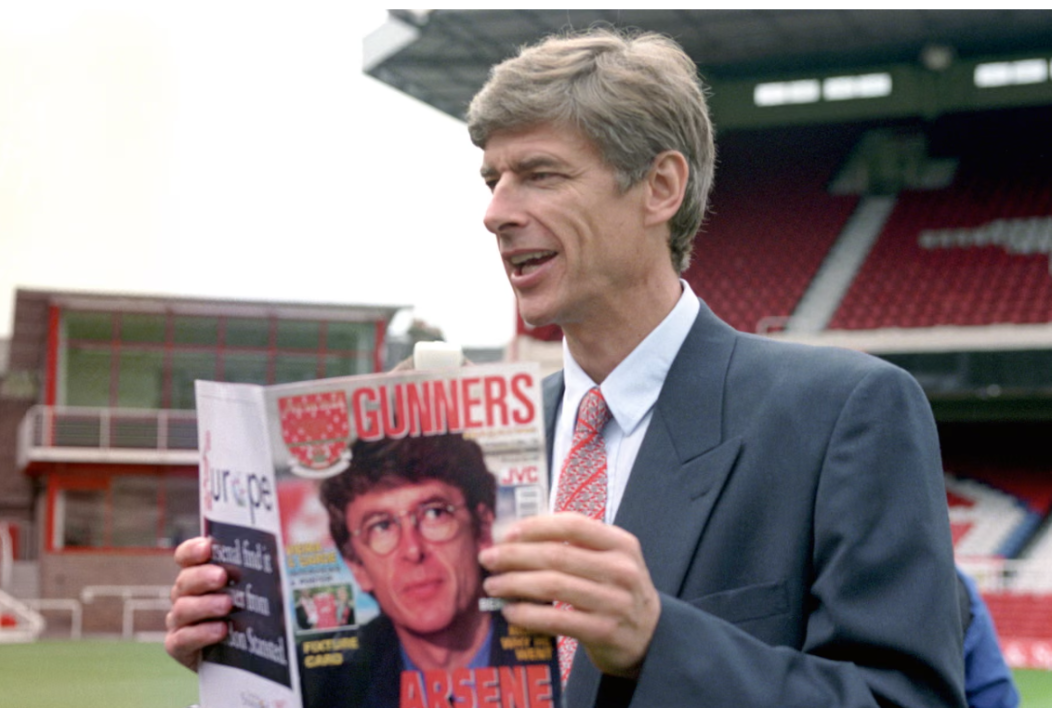
A Different Kind of Manager
Wenger looked different.
He sounded different.
He thought differently.
English football in the mid-1990s remained rooted in traditional methods. Heavy drinking sessions were common. Players often relied more on natural fitness than sports science. Tactical preparation varied wildly.
Wenger quietly changed everything.
Players received personalised diets.
Training methods became more scientific.
Recovery sessions improved dramatically.
Alcohol consumption declined.
Nutrition became an obsession.
Stretching, mobility work and sports psychology all received greater attention.
Some players resisted initially.
Most quickly realised they were becoming fitter, faster and extending their careers.
The transformation reached far beyond Arsenal.
Soon, almost every major English club copied Wenger’s methods.
The Arrival of a New Generation
Wenger inherited a magnificent defence from George Graham.
Rather than dismantle it, he added creativity.
The signings of Patrick Vieira, Nicolas Anelka, Marc Overmars, Emmanuel Petit and later Freddie Ljungberg, Robert Pires, Sylvain Wiltord and Thierry Henry reshaped Arsenal into one of Europe’s most exciting teams.
The blend proved irresistible.
Steel at the back.
Magic going forward.
The Double of 1997–98
Arsenal’s first full season under Wenger produced immediate history.
Manchester United appeared destined for another title during the winter.
Arsenal simply refused to disappear.
A remarkable run of 10 consecutive league victories overturned United’s advantage before Arsenal clinched the Premier League at Highbury against Everton.
Days later, they defeated Newcastle United 2–0 in the FA Cup Final.
Another Double.
Only this time it looked completely different from Bertie Mee’s side.
There was pace.
Fluid movement.
Elegant passing.
Technical excellence.
English football had entered a new era.
Highbury’s Finest Football
Between 1998 and 2004, Arsenal consistently produced some of the finest football Europe had to offer.
Dennis Bergkamp drifted effortlessly between midfield and attack.
Patrick Vieira dominated central midfield with power and intelligence.
Robert Pires glided past defenders.
Thierry Henry evolved into the world’s most devastating forward.
The football wasn’t merely effective.
It was beautiful.
Supporters often left Highbury talking as much about the quality of the performance as the result itself.
The Double Again: 2001–02
Arsenal reached another peak in 2001–02.
The title race against Liverpool and Manchester United remained competitive until spring before Arsenal pulled clear with another extraordinary winning run.
They sealed the Premier League at Old Trafford through Sylvain Wiltord’s winner.
Once again, the league title was followed by FA Cup success.
This time Chelsea fell 2–0 at Cardiff’s Millennium Stadium thanks to stunning goals from Ray Parlour and Freddie Ljungberg.
Two Doubles in five seasons.
No Arsenal manager had ever achieved anything similar.
The Invincibles (2003–04)
If one team defines Wenger’s reign, it is this one.
The 2003–04 Arsenal Invincibles achieved something modern football had considered impossible.
They completed an entire Premier League season without losing a single match.
Played: 38
Won: 26
Drawn: 12
Lost: 0
Premier League champions.
Only Preston North End had previously completed a league campaign unbeaten, and that had happened in 1888–89 before the introduction of modern league formats.
Arsenal did it more than a century later against vastly stronger competition.
Yet the unbeaten run stretched even further.
Across two seasons, Arsenal remained undefeated in 49 consecutive Premier League matches, establishing a record that still stands.
The team possessed everything.
Jens Lehmann’s authority.
Sol Campbell’s strength.
Ashley Cole’s pace.
Patrick Vieira’s leadership.
Gilberto Silva’s intelligence.
Dennis Bergkamp’s imagination.
Robert Pires’ elegance.
Thierry Henry’s genius.
Many supporters believe it was the greatest club side English football has ever produced.
Few arguments against that claim are especially convincing.
The Wenger Revolution: From Highbury’s Farewell to a New Beginning
For all the joy Arsenal experienced during the early years of Arsène Wenger’s reign, one challenge loomed larger than any opponent.
The club had outgrown Highbury.
It was a bittersweet problem to have. Highbury was one of English football’s most beautiful stadiums, but by the early 2000s its capacity of just over 38,000 limited Arsenal’s revenue. Manchester United, by comparison, regularly welcomed more than 67,000 supporters to Old Trafford, while Europe’s biggest clubs were generating far greater matchday income.
If Arsenal wanted to compete with football’s financial elite, something had to change.
That decision would shape the next decade of the club’s history.
Highbury’s Last Great Team
Before leaving their spiritual home, Arsenal produced one final campaign that reminded everyone of their quality.
The 2005–06 UEFA Champions League run remains one of the finest European adventures in the club’s history.
Wenger’s side eliminated Real Madrid, Juventus, and Villarreal to reach the club’s first-ever Champions League final.
Along the way, Arsenal set a then-record of 10 consecutive clean sheets in the competition, with goalkeeper Jens Lehmann and a defence marshalled by Kolo Touré and Sol Campbell proving almost impenetrable.
The final, held at the Stade de France in Paris on 17 May 2006, began perfectly.
Sol Campbell headed Arsenal into the lead despite Lehmann having been sent off in the opening 20 minutes after bringing down Samuel Eto’o.
Reduced to ten men, Arsenal defended heroically for over an hour.
But Barcelona eventually turned the match around through goals from Eto’o and Juliano Belletti, winning 2–1.
The defeat remains one of the great “what if?” moments in Arsenal history.
Many supporters still wonder how differently the club’s European story might have unfolded had they held on that evening in Paris.
Goodbye, Highbury
Just days before the Champions League final, Highbury had hosted its final competitive match.
On 7 May 2006, Arsenal defeated Wigan Athletic 4–2.
Appropriately, Thierry Henry scored a hat-trick, including a late penalty that allowed him to kiss the turf in front of the North Bank after the final whistle.
It was an emotional scene.
Generations of supporters had passed through Highbury’s famous marble halls.
The East Stand Art Deco façade had become an icon of English football.
Legends from Cliff Bastin to Tony Adams had graced its pitch.
When the final whistle blew, many supporters stayed in their seats long after the stadium had emptied.
They knew they were saying goodbye to more than bricks and concrete.
They were saying goodbye to home.
The Emirates Stadium Era Begins
The Emirates Stadium officially opened for the 2006–07 season.
With a capacity of more than 60,000, it immediately became one of Europe’s finest football venues.
Financially, the move was essential.
Emotionally, it was difficult.
Supporters embraced the modern facilities but missed the intimacy and character of Highbury. Visiting teams often commented that the atmosphere felt quieter than Arsenal’s old home, particularly during the early years.
More importantly, the move came at a significant financial cost.
Loan repayments restricted Arsenal’s spending in the transfer market for several seasons.
While rivals such as Chelsea and Manchester United invested heavily, Wenger frequently had to sell established stars before replacing them with younger, less expensive players.
It was a balancing act few managers could have managed as successfully.
The “Nearly Years” (2005–2013)
The period between 2005 and 2013 remains one of the most fiercely debated chapters in Arsenal FC history.
Critics focus on the lack of trophies.
Supporters often remember something different.
This was the era of breathtaking young talent.
Wenger assembled squads featuring Cesc Fàbregas, Robin van Persie, Samir Nasri, Tomáš Rosický, Theo Walcott, Jack Wilshere, Alex Song, Aaron Ramsey, Gaël Clichy, Bacary Sagna, and later Mesut Özil.
Many of these players produced football of extraordinary quality.
Too often, however, injuries, inexperience and financial limitations prevented Arsenal from turning promise into silverware.
The club regularly qualified for the UEFA Champions League despite operating with far smaller transfer budgets than many direct rivals.
That consistency is viewed far more favourably today than it was at the time.
Heartbreak Along the Way
Several moments came to define this era.
The 2007–08 side looked capable of winning the Premier League before Eduardo suffered his horrific leg injury against Birmingham City. Arsenal’s title challenge gradually unravelled.
The 2010–11 League Cup Final defeat to Birmingham City was another painful afternoon. A late defensive misunderstanding allowed Obafemi Martins to score the winner with almost the last kick of the game.
Perhaps no result hurt supporters more than the 8–2 defeat to Manchester United at Old Trafford on 28 August 2011.
It remains Arsenal’s heaviest league defeat in the Premier League era.
The result exposed the lack of depth in Wenger’s squad following the departures of Fàbregas and Nasri earlier that summer.
Yet character often reveals itself after adversity.
Within days, Wenger strengthened the squad by signing players including Mikel Arteta, Per Mertesacker, André Santos, Yossi Benayoun (loan), and Park Chu-young on transfer deadline day.
Arsenal recovered to finish third in the league.
The End of the Trophy Drought
By 2014, the pressure surrounding Wenger had become immense.
Nine years without a major trophy had fuelled constant debate over whether the club needed a new direction.
The answer arrived at Wembley.
FA Cup 2014
Arsenal faced Hull City in the FA Cup Final.
After only eight minutes, Hull led 2–0.
Another collapse seemed possible.
Instead, Arsenal responded magnificently.
Santi Cazorla curled in a stunning free-kick before Laurent Koscielny equalised.
In extra time, Aaron Ramsey swept home Olivier Giroud’s clever pass to secure a dramatic 3–2 victory.
The celebrations felt like years of frustration disappearing in an instant.
For many younger supporters, it was the first major trophy they had witnessed.
Back-to-Back Success
Arsenal retained the FA Cup in 2015, comfortably defeating Aston Villa 4–0.
Theo Walcott, Alexis Sánchez, Per Mertesacker and Olivier Giroud all found the net as Wenger became the competition’s most successful manager.
Two years later came another memorable triumph.
Against Antonio Conte’s newly crowned Premier League champions Chelsea, Arsenal were widely considered underdogs.
Instead, they produced one of their finest performances of the season.
Goals from Alexis Sánchez and Aaron Ramsey secured a deserved 2–1 victory.
Wenger had now won seven FA Cups as Arsenal manager—a record unmatched in English football.
Farewell to Arsène Wenger
By 2018, however, the relationship between Wenger and sections of the support had become strained.
Arsenal had missed out on Champions League qualification for consecutive seasons.
Rivals had overtaken them domestically.
The club announced on 20 April 2018 that Wenger would step down at the end of the season.
His final home match came against Burnley.
The Emirates rose as one.
Supporters who had debated his future for years united to honour the man who had transformed their club.
When Wenger left in May 2018, he departed as the longest-serving and most successful manager in Arsenal’s history.
His achievements stretched far beyond trophies.
He revolutionised sports science in English football.
He modernised recruitment.
He developed world-class players.
He delivered three Premier League titles, seven FA Cups and countless unforgettable memories.
His legacy continues to spark debate.
Was he too loyal to certain players?
Did Arsenal wait too long before planning for life after him?
Perhaps.
Yet history tends to soften arguments and sharpen achievements.
Viewed through the lens of time, Arsène Wenger did far more than win matches.
He changed Arsenal forever.
The Post-Wenger Transition (2018–2022)
Replacing Arsène Wenger always felt impossible.
For 22 years, Arsenal supporters had known only one manager.
Now the club had to discover its identity all over again.
Unai Emery
Former Paris Saint-Germain manager Unai Emery arrived in the summer of 2018 with an impressive European reputation.
His first season showed promise.
Arsenal reached the 2019 UEFA Europa League Final, where victory over Chelsea would have secured both silverware and Champions League qualification.
Instead, Chelsea dominated the second half, winning 4–1 in Baku.
It proved a devastating defeat.
League inconsistency and dressing-room problems soon followed.
Emery left the club in November 2019.
Freddie Ljungberg’s Brief Return
Club legend Freddie Ljungberg accepted the role of caretaker manager during a turbulent period.
Although results remained inconsistent, supporters appreciated seeing one of the Invincibles back on the touchline.
His spell proved short but important in stabilising the dressing room before Arsenal made their next permanent appointment.
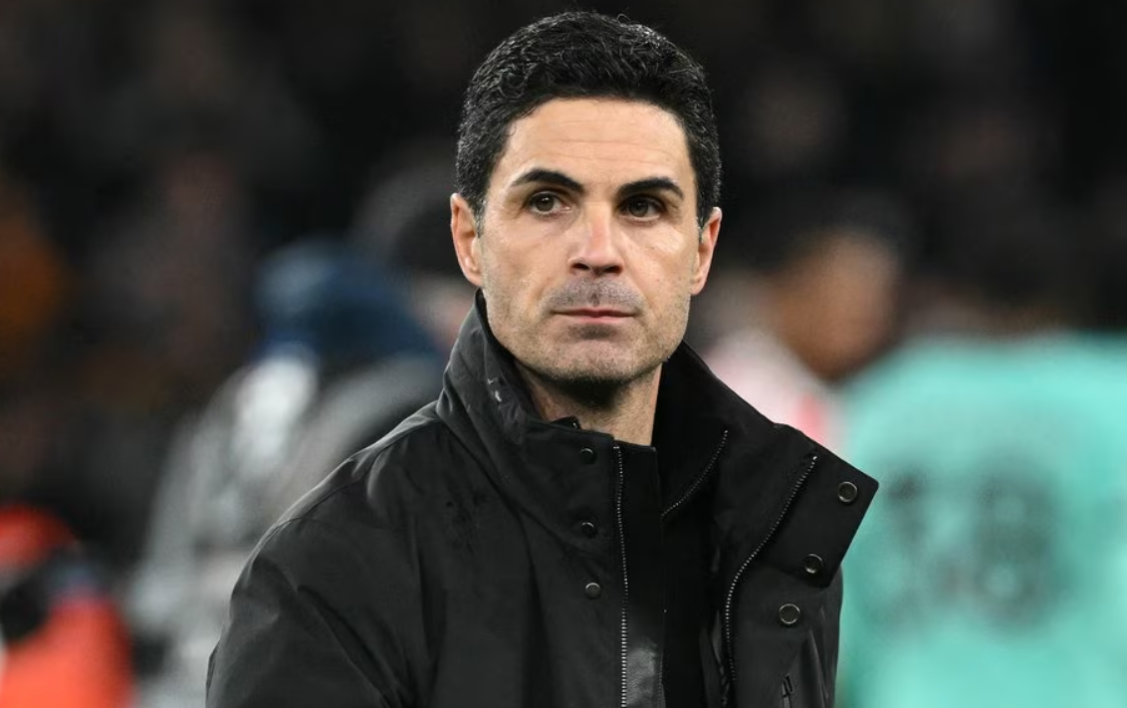
Mikel Arteta Comes Home
On 20 December 2019, Arsenal appointed former captain Mikel Arteta as head coach.
The decision carried risk.
Arteta had never managed professionally.
His coaching experience came as Pep Guardiola’s assistant at Manchester City.
Yet Arsenal believed his understanding of the club’s culture made him the right choice.
They were thinking long-term.
An Early Trophy
Despite taking charge midway through the season—and during the disruption caused by the COVID-19 pandemic—Arteta delivered immediate success.
Arsenal defeated Manchester City in the FA Cup semi-final before overcoming Chelsea 2–1 in the final.
Pierre-Emerick Aubameyang scored both goals.
Arteta had won the FA Cup within eight months of becoming manager.
The Community Shield followed after victory over Liverpool on penalties.
It appeared the rebuilding process might happen quickly.
Reality proved more complicated.
Difficult Seasons
The next two campaigns tested everyone’s patience.
Arsenal finished eighth in consecutive Premier League seasons.
Experienced players departed.
Several expensive signings failed to meet expectations.
Arteta remained committed to a long-term rebuild.
Slowly, the squad became younger.
A new leadership group emerged.
Many doubted the project.
Inside the club, belief never disappeared.
The Arteta Rebuild and the Return to the Summit (2022–Present)
When Mikel Arteta accepted the Arsenal job in December 2019, he inherited a club searching for direction. The squad lacked balance, confidence was fragile, and Arsenal had drifted away from the Premier League’s elite after years of inconsistency.
The rebuilding process was never going to happen overnight.
Arteta, working closely with sporting director Edu, committed to a clear long-term vision. Rather than assembling a squad of established superstars, Arsenal focused on young, ambitious players who could grow together. Every signing had to fit both the tactical system and the culture Arteta wanted to create.
The results did not arrive immediately. Arsenal endured difficult campaigns, finishing outside the Champions League places while experienced players moved on and a new core gradually emerged.
Supporters were asked to trust the process.
Eventually, that trust was rewarded.
From Contenders to Champions
The 2022–23 season marked Arsenal’s return as genuine title challengers. Playing fast, aggressive and fearless football, the Gunners spent much of the campaign at the top of the Premier League before eventually finishing second with 84 points behind Manchester City.
Rather than allowing disappointment to define them, Arsenal improved again.
In 2023–24, they pushed Manchester City all the way to the final day, collecting 89 points—one of the highest totals in the club’s history—yet narrowly missed out on the title once more.
Another runners-up finish followed in 2024–25, leaving many wondering whether Arsenal would ever clear the final hurdle.
They answered that question emphatically in 2025–26.
Premier League Champions Again
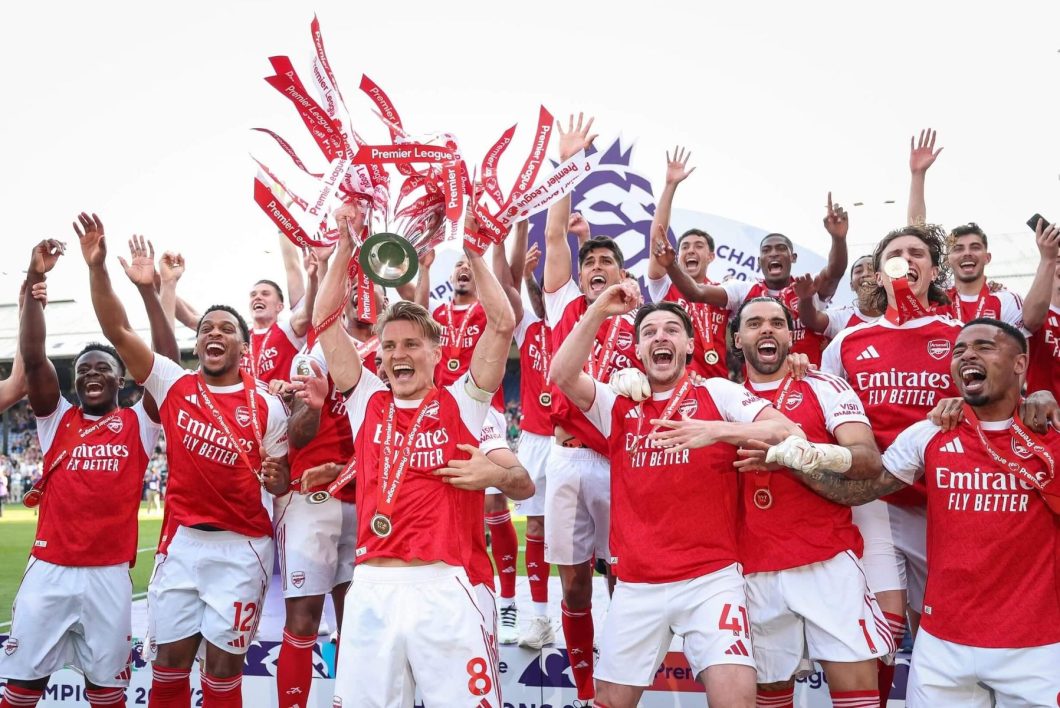
After three consecutive seasons of falling just short, Arsenal finally reclaimed the Premier League crown in the 2025–26 season, ending a 22-year wait for a league championship dating back to the Invincibles of 2003–04. Mikel Arteta’s side were confirmed as champions after Manchester City’s draw at Bournemouth in Matchweek 37 before lifting the trophy following a 2–1 victory over Crystal Palace on the final day. Arsenal finished the season on 85 points, seven clear of second-placed Manchester City.
The title represented far more than another trophy.
It validated years of patient planning, intelligent recruitment and unwavering belief in a long-term project that had often been questioned from outside the club.
For Arteta, it was the crowning achievement of a remarkable rebuilding job. Having captained Arsenal as a player, he became the first manager in the Premier League era to win the title with a club he had previously represented on the pitch.
A New Generation of Arsenal Heroes
This Arsenal team reflects many of the qualities that have defined the club throughout its history.
Bukayo Saka, a product of the Hale End Academy, has developed into one of the finest wide players in world football and the symbol of a new generation.
Captain Martin Ødegaard provides creativity, composure and leadership, while Declan Rice has transformed Arsenal’s midfield with his athleticism, intelligence and winning mentality.
At the back, William Saliba and Gabriel Magalhães have formed one of Europe’s strongest defensive partnerships, with goalkeeper David Raya providing assurance behind them.
Further forward, Kai Havertz, after overcoming a difficult start to life in north London, has become an important tactical weapon, while Gabriel Martinelli continues to provide pace and unpredictability from the left.
The squad combines youth, experience and togetherness in a way that recalls many of Arsenal’s greatest sides.
Looking Ahead
Winning the Premier League does not mark the end of Arsenal’s story.
If anything, it signals the beginning of a new chapter.
The challenge now is to build a dynasty capable of competing consistently for domestic and European honours, just as Herbert Chapman, George Graham and Arsène Wenger did in previous generations.
History has shown that Arsenal rarely stand still for long.
From Dial Square to Woolwich, from Highbury to the Emirates Stadium, and from the Invincibles to Arteta’s champions, every era has left its mark on the club.
The latest Premier League title ensures that Arsenal’s modern history now has another glorious chapter—and supporters around the world will hope it is only the first of many under Mikel Arteta.
Arsenal’s Trophy Cabinet: A Full Overview
Few clubs in English football can match Arsenal’s honours list. While supporters will always debate which triumph meant the most, the club’s trophy cabinet tells the story of more than a century of sustained success.
League Titles (13)
- 1930–31
- 1932–33
- 1933–34
- 1934–35
- 1937–38
- 1947–48
- 1952–53
- 1970–71
- 1988–89
- 1990–91
- 1997–98
- 2001–02
- 2003–04 (The Invincibles)
- 2025-2026
FA Cups (14 – Record Holders)
- 1930
- 1936
- 1950
- 1971
- 1979
- 1993
- 1998
- 2002
- 2003
- 2005
- 2014
- 2015
- 2017
- 2020
League Cups (2)
- 1987
- 1993
European Honours
- Inter-Cities Fairs Cup (1969–70)
- UEFA Cup Winners’ Cup (1993–94)
Community Shields (17 outright, plus shared titles under the old format)
Arsenal remain one of the most successful clubs in the history of the Community Shield, reflecting their long-standing presence among English football’s elite.
The Greatest Arsenal Players of All Time
Every generation believes its heroes were the greatest, and Arsenal have been fortunate enough to produce icons in every era.
Before modern television spread football across the globe, Cliff Bastin became the club’s first true superstar, combining remarkable goalscoring with exceptional consistency. Ted Drake followed, setting a First Division record by scoring seven goals in a single league match against Aston Villa in 1935—a feat that still stands.
The elegant Liam Brady brought artistry to midfield during the 1970s, while Charlie George ensured immortality with his winning goal and unforgettable celebration in the 1971 FA Cup Final.
No player represents Arsenal’s values more completely than Tony Adams. The academy graduate captained the club across three decades, lifting league titles in three different eras and becoming the embodiment of leadership, loyalty and resilience.
When Ian Wright arrived in 1991, he transformed Arsenal’s attack with infectious enthusiasm and an extraordinary eye for goal. He became the club’s all-time leading scorer before another legend surpassed him.
That legend was Thierry Henry.
Henry remains, for many, the greatest player ever to wear an Arsenal shirt. Elegant, devastatingly quick and endlessly creative, he finished his Arsenal career with 228 goals and helped redefine what a modern striker could be.
Alongside him, Dennis Bergkamp provided footballing intelligence that bordered on genius. His first touch, vision and imagination elevated everyone around him.
In midfield, Patrick Vieira combined physical dominance with technical brilliance, leading Arsenal through some of the club’s greatest battles, while Robert Pires brought grace, goals and effortless creativity from the left flank.
Today, Bukayo Saka is writing his own chapter. Having risen through Hale End, he represents everything supporters cherish: humility, commitment, technical excellence and an unmistakable connection to the club.
The story is still being written.
Highbury to the Emirates: The Homes of Arsenal
Arsenal’s history can almost be traced through its stadiums.
The club began at the Manor Ground in Plumstead, close to the Royal Arsenal where Dial Square first took shape.
In 1913 came the move that transformed the club’s future.
Highbury quickly became more than a football stadium. Its famous East Stand, Marble Halls and close proximity between supporters and pitch gave it a character unmatched anywhere in England.
Generations of Arsenal legends called it home.
When Arsenal left in 2006, many supporters feared the club would lose part of its soul.
Instead, Highbury found a remarkable second life. The stadium was converted into residential apartments, while the historic East and West Stand façades were carefully preserved, ensuring one of English football’s architectural treasures survived.
The Emirates Stadium represented ambition rather than replacement.
It allowed Arsenal to compete financially with Europe’s biggest clubs while providing a world-class home capable of welcoming more than 60,000 supporters every matchday.
Today, statues of Herbert Chapman, Thierry Henry, Tony Adams, Dennis Bergkamp, Arsène Wenger and Ken Friar stand outside the stadium, linking Arsenal’s past with its future.
The Rivalries That Define Arsenal
Every great football club is shaped not only by its triumphs but also by the opponents that bring out its very best.
The North London Derby
No fixture matters more to Arsenal supporters than the meeting with Tottenham Hotspur.
The rivalry dates back to Arsenal’s move to Highbury in 1913 and intensified after the club’s controversial election to the First Division in 1919. Geography fuels the rivalry, but history keeps it alive.
Victories over Spurs are celebrated differently.
Defeats linger longer.
For generations of supporters, finishing above Tottenham has become an annual source of pride—a tradition affectionately known as St Totteringham’s Day whenever Arsenal mathematically guarantee that outcome.
Few rivalries in world football combine local identity, history and emotion as intensely as the North London Derby.
Arsenal vs Manchester United
During the late 1990s and early 2000s, Arsenal and Manchester United produced perhaps the defining rivalry of the Premier League era.
Arsène Wenger and Sir Alex Ferguson constantly pushed each other to new heights.
Roy Keane battled Patrick Vieira.
Martin Keown confronted Ruud van Nistelrooy after his missed penalty at Old Trafford.
The “Battle of Old Trafford” in 2003 and the infamous “Battle of the Buffet” in 2004 became symbols of an era when every meeting felt like a title decider.
Those contests helped elevate the Premier League’s global reputation.
Arsenal vs Liverpool
Arsenal’s rivalry with Liverpool stretches back generations.
The title decider at Anfield in 1989 remains one of English football’s greatest matches, while meetings during the 1970s, 1980s and more recently under Jürgen Klopp frequently carried enormous significance.
Unlike the fierce local rivalry with Tottenham or the combustible Wenger-Ferguson years, Arsenal versus Liverpool often centres on mutual respect between two clubs with rich traditions and attacking identities.
When both are competing for honours, the fixture almost always delivers.
The history of Arsenal Football Club cannot be measured only by silverware, unbeaten seasons or legendary players.
Those achievements matter, of course. They always will.
But Arsenal’s story has never been solely about winning. It has been about how the club chooses to compete. From Herbert Chapman’s tactical innovations to Arsène Wenger’s revolution in sports science, and from George Graham’s iron discipline to Mikel Arteta’s meticulous rebuilding project, Arsenal have repeatedly shaped the direction of English football rather than simply following it.
That sense of identity explains why supporters remain so deeply connected to the club through every high and low. Arsenal have experienced periods of dominance, years of frustration and moments of genuine heartbreak. Yet each generation has inherited something valuable from the last: a belief that football should be ambitious, intelligent and played with courage.
The next great chapter has not yet been written.
Perhaps it will belong to Saka, Saliba and Ødegaard. Perhaps another young player from Hale End will emerge to inspire a new era. Whatever happens, Arsenal’s history reminds us that greatness is never built overnight. It grows through vision, patience and the determination to keep moving forward.
From a group of factory workers in Woolwich to one of football’s most recognisable clubs, Arsenal’s journey remains one of the game’s finest stories.
And for Gunners everywhere, the next page is always the most exciting one.
REFERENCES:
- Arsenal Football Club. History. Arsenal Football Club, https://www.arsenal.com/history. Accessed 26 June 2026.
- Arsenal Football Club. Honours. Arsenal Football Club, https://www.arsenal.com/history/honours. Accessed 26 June 2026.
- BBC Sport. Arsenal. BBC Sport, https://www.bbc.com/sport/football/teams/arsenal. Accessed 26 June 2026.
- The Arsenal History Society. The Arsenal History Society. The Arsenal History Society, https://thearsenalhistory.com/. Accessed 26 June 2026.
- The Football Association. The Emirates FA Cup. The Football Association, https://www.thefa.com/competitions/thefacup. Accessed 26 June 2026.
- Rec.Sport.Soccer Statistics Foundation (RSSSF). The Rec.Sport.Soccer Statistics Foundation. RSSSF, https://www.rsssf.org/. Accessed 26 June 2026.